Carrying a premature baby: understanding kangaroo care
When a baby arrives sooner than expected, skin-to-skin contact and carrying take on particular importance. Often recommended from the first days in a neonatal unit, kangaroo care supports thousands of families every year. Here is what to know.
Cover photograph: Happi Raphael, Laquintinie Hospital, Douala · CC BY-SA 4.0.

What is kangaroo care?
Developed in Colombia in the 1970s, kangaroo care involves holding a baby skin to skin, upright against a parent’s chest, as often and for as long as possible. It is now recommended by theWorld Health Organization, including for babies born prematurely or with a low birth weight.
It generally combines four elements: early and prolonged skin-to-skin contact, breastfeeding where possible, a hospital discharge plan tailored to the baby and support for parents once they return home.
Benefits of skin-to-skin contact for babies
For premature newborns, regular skin-to-skin contact is associated with:
- better body temperature regulation,
- a more stable heart rate and breathing pattern,
- deeper, better-quality sleep,
- support in establishing breastfeeding.
What about parents?
An initial separation after a premature birth can be difficult. Skin-to-skin contact helps restore closeness, build confidence in daily care and take an active part in the baby’s development alongside the medical team. Fathers and other parents can also practise skin-to-skin contact, with similar benefits for bonding.
Can you continue after leaving hospital?
You can continue skin-to-skin contact at home following your neonatal team’s instructions. Before moving on to a wrap or commercial carrier, ask the team for advice specific to your child’s weight, breathing and development. The weight on a product page is not enough to decide when to start.
Before starting or resuming babywearing, discuss these points with your paediatrician or midwife:
- the right time to start or resume, based on your child’s development,
- a carrier that provides enough support and a close fit for your baby’s size,
- head position: keep the face visible, nose and mouth clear, and chin away from the chest.
Getting support
Carrying a baby born prematurely may call for closer guidance than carrying a full-term baby. A babywearing consultant, paediatric nurse or organisation supporting parents of preterm babies can help you find techniques and equipment suited to your child.
Skin-to-skin contact and carrying are opportunities to bond at your own pace, with support from the team caring for your baby.
Read Health Canada’s advice on baby carriers, including after a premature birth.
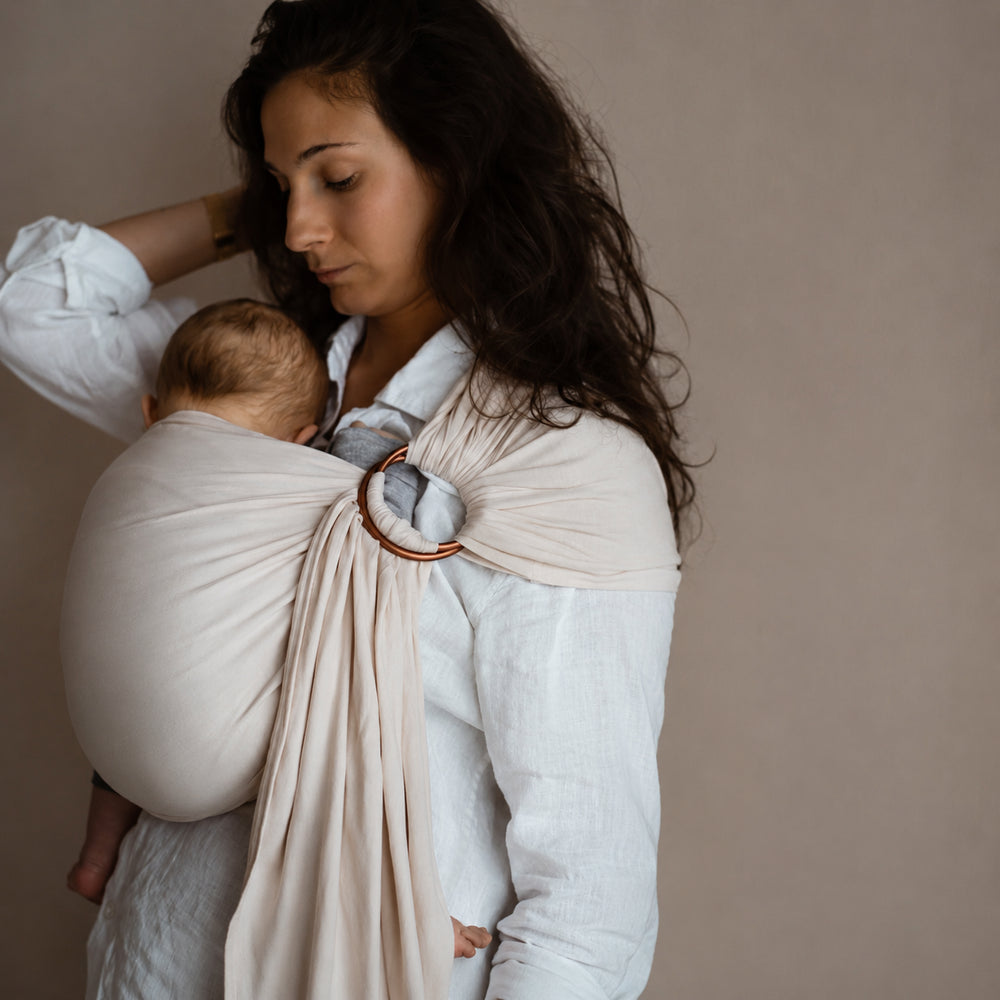
Later on, if a ring sling is suitable for your child
Once your neonatal team has confirmed a ring sling is suitable, consult the product details and instructions. The photograph below shows the sling sold in our shop.